
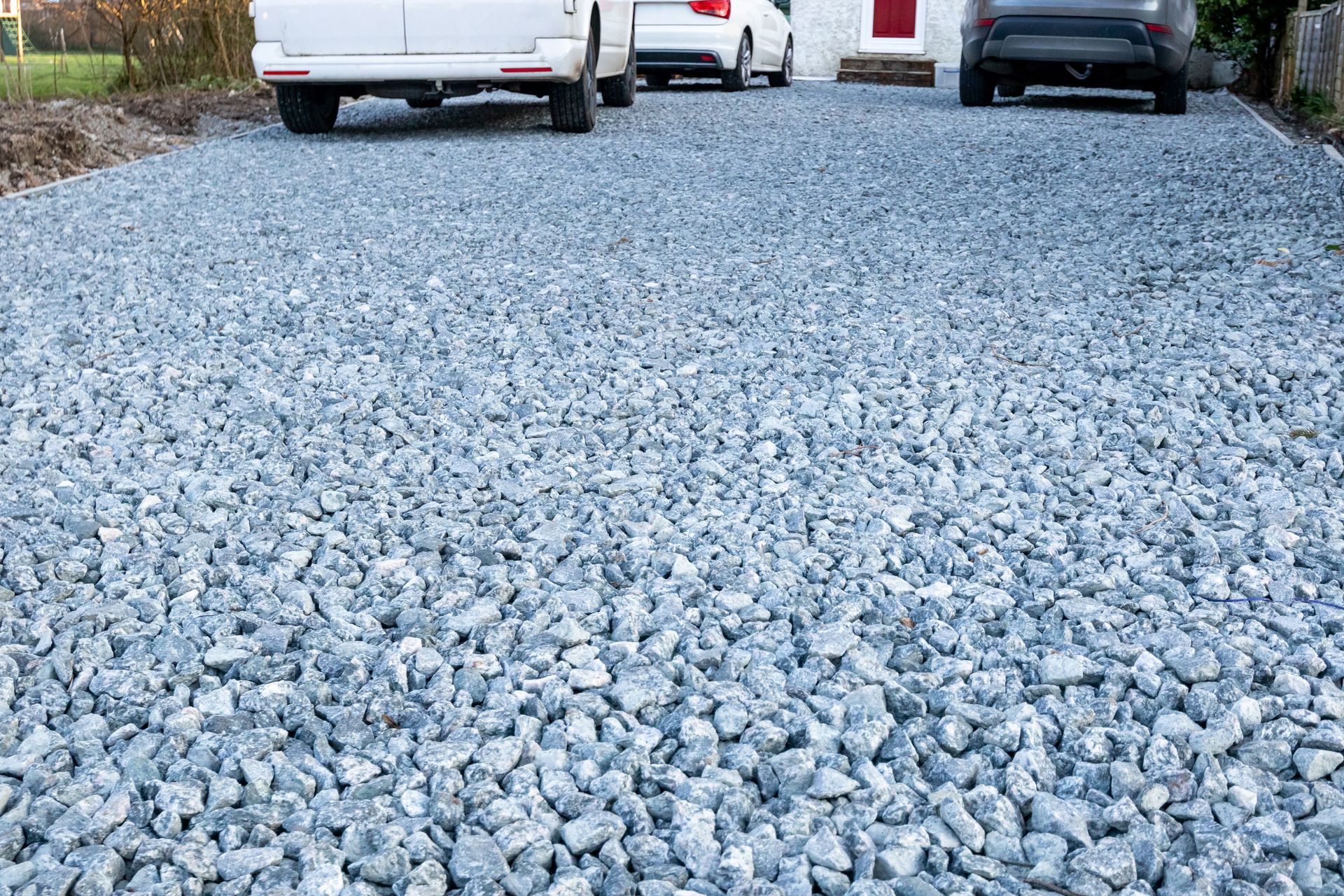
Access Renewed After Years of Wear
Gravel Driveway Restoration in Lake City for worn, uneven, and rough travel surfaces
A driveway that has become rough, uneven, or difficult to travel reduces property access and accelerates vehicle wear over time. Restoration addresses the accumulated effects of traffic displacement, weather erosion, and years of surface breakdown by reshaping the driveway profile and improving gravel distribution where the existing material allows. Cox Land Services performs gravel driveway restoration for properties in Lake City where the current surface no longer supports comfortable or reliable vehicle movement.
The process involves redistributing gravel across worn areas, reshaping the crown and slope, and addressing visible ruts or depressions that have developed through repeated use. Restoration improves the driveway's appearance and usability without requiring complete reconstruction, though material depth and base condition affect what the service can accomplish.
Arrange a driveway assessment to determine current material depth, surface wear, and restoration options.
What Restoration Changes About the Driveway
Restoration work begins with evaluating how much gravel remains on the driveway and where it has shifted due to traffic patterns and runoff. Equipment redistributes the material to fill low spots, smooth rough transitions, and reestablish a consistent surface profile that supports daily vehicle use.
Once restored, the driveway provides a smoother ride, fewer jarring impacts from ruts or potholes, and a more consistent surface from the entrance to the endpoint. The gravel remains stable under normal traffic, and the visual appearance shows a renewed, well-maintained access route rather than a deteriorating path.
Restoration does not replace severely eroded base layers or install new gravel if the existing material is insufficient. Driveways with extensive base failure or minimal remaining gravel may require additional material delivery and deeper reconstruction beyond the scope of surface restoration alone.
Common Questions About This Service
Restoration questions often address the difference between grading and full rebuilding, and what property owners should expect.
How is restoration different from routine grading?
Restoration involves more comprehensive reshaping and addresses multiple wear patterns across the entire driveway, while grading typically smooths specific problem areas or maintains a surface that still functions reasonably well.
What condition does a driveway need to be in for restoration to work?
The driveway must retain enough gravel to redistribute and a base layer stable enough to support reshaped material, or additional gravel and base work become necessary before restoration can succeed.
Does restoration improve how water drains off the driveway?
Restoring the crown and slope helps surface water move toward the edges rather than pooling in the travel path, though it does not install drainage structures or address water flowing onto the driveway from surrounding land.
How long does a restored gravel driveway last before needing attention again?
Lifespan depends on traffic volume and weather exposure, but restored driveways in Lake City typically remain functional for several years before significant wear reappears and another round of work becomes advisable.
Can restoration be completed if only part of the driveway is in poor condition?
Yes, though restoring only a section can create noticeable transitions between old and new profiles, so addressing the full length often produces a more consistent result.
Cox Land Services provides gravel driveway restoration that renews access, appearance, and everyday usability for properties with worn travel surfaces. Request an estimate that reflects your driveway's current condition, length, and material availability.